The Most Effective Bunk Single Beds Tricks To Rewrite Your Life


Bunk Single Beds
Bunk beds can make a big impact on the appearance of a child's bedroom. They can help them keep their spaces tidy, clean and organized by giving them a place to store books, toys and other small bits and pieces.
They also can create a uninviting, less private space. You can overcome this by selecting furniture that has design flexibility.
Size
Bunk beds are a practical solution to sleep more than one person in the same room. To ensure safety and comfort, it is important to choose the right size. Bed dimensions must align with the room's size and ceiling height to prevent difficulties in getting into and out of the bed. The side rails of the bunk bed should be high enough to hold mattresses and should attach firmly on the frame.
Generally speaking, bunk single beds are smaller than standard single beds, but they're still suitable for adults. This lets you pick a mattress that is the right size for your body type and sleeping requirements. Also, choosing a thicker mattress for the top bunk is typically preferred for children who are younger because it makes it easier to climb into and out of the bed without falling.
There are a variety of options for dimensions of the mattresses on a bunkbed, including twin over futon and twin over full. Both of these configurations are perfect for parents that have children of various age groups. Twin over full bunk bed has queen-sized mattresses at the top and a large mattress at the bottom. This is a great choice for families that have children of similar heights and ages. Futon bunks come with a standard bunk bed top, and a futon beneath which can be used as a couch, or a bed.
You can also choose an XL full size bunkbed which is five inches longer than a traditional full mattress. These mattresses are ideal for taller adults and teens. single sleepers.
For healthcare settings that often change their patient demographics and needs, bunk single beds are a convenient solution to accommodate different demands for sleep. If your facility has one bed or a bunk configuration, it is important to regularly inspect and maintain each unit to ensure that they meet the highest standards of comfort and safety.
Bunk beds are an excellent option for hospitals which require the most the space available in a tiny room. Bunk Beds Store are sturdy, and they are a the best value as you save space by removing the need for extra furniture. Bunk beds are also a great method to encourage collaboration between your staff and patients. This can improve patient satisfaction and boost positive outcomes.
Style
It's important to think about the design of your single or bunk bed, as well as the size. For example, metal bunk beds are a great choice for establishments that are looking to create a more traditional look without losing durability and strength. They are also less messy than single upholstered beds.
Single beds are more suitable for rehabilitation and long-term health facilities with stable and permanent patient populations. They are less cost effective than bunk beds, however they provide the same level of comfort and safety.
Another advantage of single beds is that they're usually simpler to dress than bunk beds. It can be challenging enough to dress a twin bed when it's sitting on the ground but attempting to dress one while hanging from a ladder is a completely new level of difficulty! Bunk beds require a certain amount of agility to climb. This could be a challenge for children or patients with mobility issues.
Single beds can be dressed a variety of ways. This gives facility managers more flexibility and allows them to create a unique space for guests. They can be combined with furniture to make the room more inviting and comfortable. A bunk bed, for instance can be paired with a desk or daybed to maximize the available space.
Ultimately, it's the facility's manager to decide what bed setup will be the most appropriate for their particular needs and the population. Consider the most important factors for your company in order to make the best decision and find the perfect solution for your patients.
Whatever kind of bed you decide to buy, be sure to check them regularly and maintain them to ensure they're secure and working correctly. This can reduce the risk of liability and prolong their life spans. Journal of Facility Management states that regular maintenance can cut repairs costs by 20 percent. Bunk beds and individual beds are both excellent choices to furnish facilities for behavioral health. However, it is important to take into account your specific patient demographics as well as the size of your facility in order to determine which option will be most suitable for your particular program.
Safety
Whether it's for a child's bedroom or a behavioral health facility, bunk single beds offer many advantages. They can help make the most of space and also provide storage, however, they also raise security issues when it comes to height. Bunk beds require a ladder to access the upper bed and children might be tempted to play on the bed or climb up the ladder. In order to keep everyone safe, it is essential to teach your children to use the ladder correctly and ensure that it's secure.
Guard rails are another important safety feature for bunk beds. They stop falling. They should be installed at least 16cm higher than the surface of the bed and their gaps should not be larger than 7.5cm. There's plenty of information on how to properly install your guard rails and make sure that they're meeting safety standards by examining the manufacturer's guidelines.
The correct bedding is a important aspect of bunk bed safety. You should only use mattresses that are safe of your chosen brand and ensure they are firmly seated on the frame. Regularly cleaning the mattress and the support system will decrease the chance of injury and entrapment.
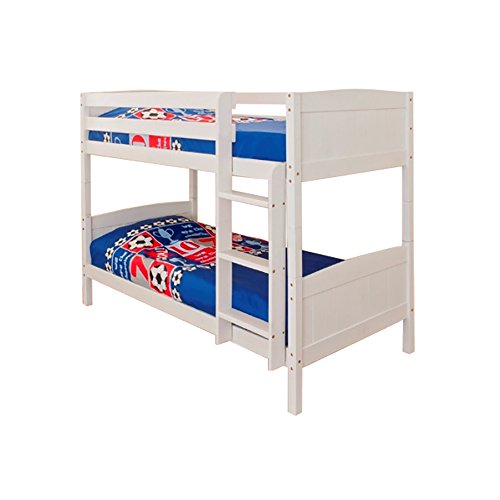
Ladders or stairs that are used to get to the top bunk must be built with strength and secured to prevent accidents. They should be placed at an angle that prevents children from climbing over or under guardrails. Handrails must also be easy to hold. Toys and clutter should be cleared away to ensure that children aren't inclined to climb over them.
Lastly, you should be aware of the issues with cleaning that bunk beds cause and implement regular sanitation procedures to ensure that hygiene remains at a high level. According to a research study published in Infection Control Today bunk beds may require 20% more time for cleaning than single beds. By following these guidelines, you minimize the risks of bunk beds while also providing your patients with a relaxing, welcoming space.
Convenience
Bunk single beds offer an easy solution for facility managers to address space efficiency, patient safety and comfort requirements. They are available in a variety of sizes to suit diverse patients, and their straightforward design makes them easy to clean and maintain.
Increased Safety Single beds are more stable than bunk bed frames and require fewer structural elements which reduces the risk of falling which is a major concern in healthcare facilities. Their simple design and low profile also make them easier to reach for staff, reducing injury risks.
Effectively using vertical space in rooms is a vital aspect in a variety of human service and behavioral health settings, where floorspace is at a premium. Bunk beds can allow the facility to accommodate more people in the same space, which could result in savings. This is especially beneficial for high-density building or small areas with little floor space.
The beds are designed to offer the greatest flexibility in a space as they can easily be separated into two individual single beds when a child grows out of them or no longer needs to share rooms. These beds are great for families that anticipate changes in their children's sleeping habits. They can also reduce clutter and provide more storage space.
The lower platform can be transformed into a futon during day, which maximizes space in a bedroom or apartment. Certain frames are also set in an L shape so that the lower platform can be used as a couch, while a mattress is placed on top. This provides additional flexibility and ease of use. Bunk beds are also available with integrated storage to keep the room tidy and organized. Bunk single beds are typically more expensive than standard single beds, but they're more cost-effective in the long term due to lower maintenance costs and longer lifespans. They're also easy to assemble and disassemble, making it easy for moving and reorganization. This feature can be an important consideration for facilities that frequently reorganize their rooms to match changing demographics of patients and clinical requirements. The beds are also easy to keep clean and sanitary and contributes to efficient infection control practices.